
Reappointed to the National University of Lesotho Council
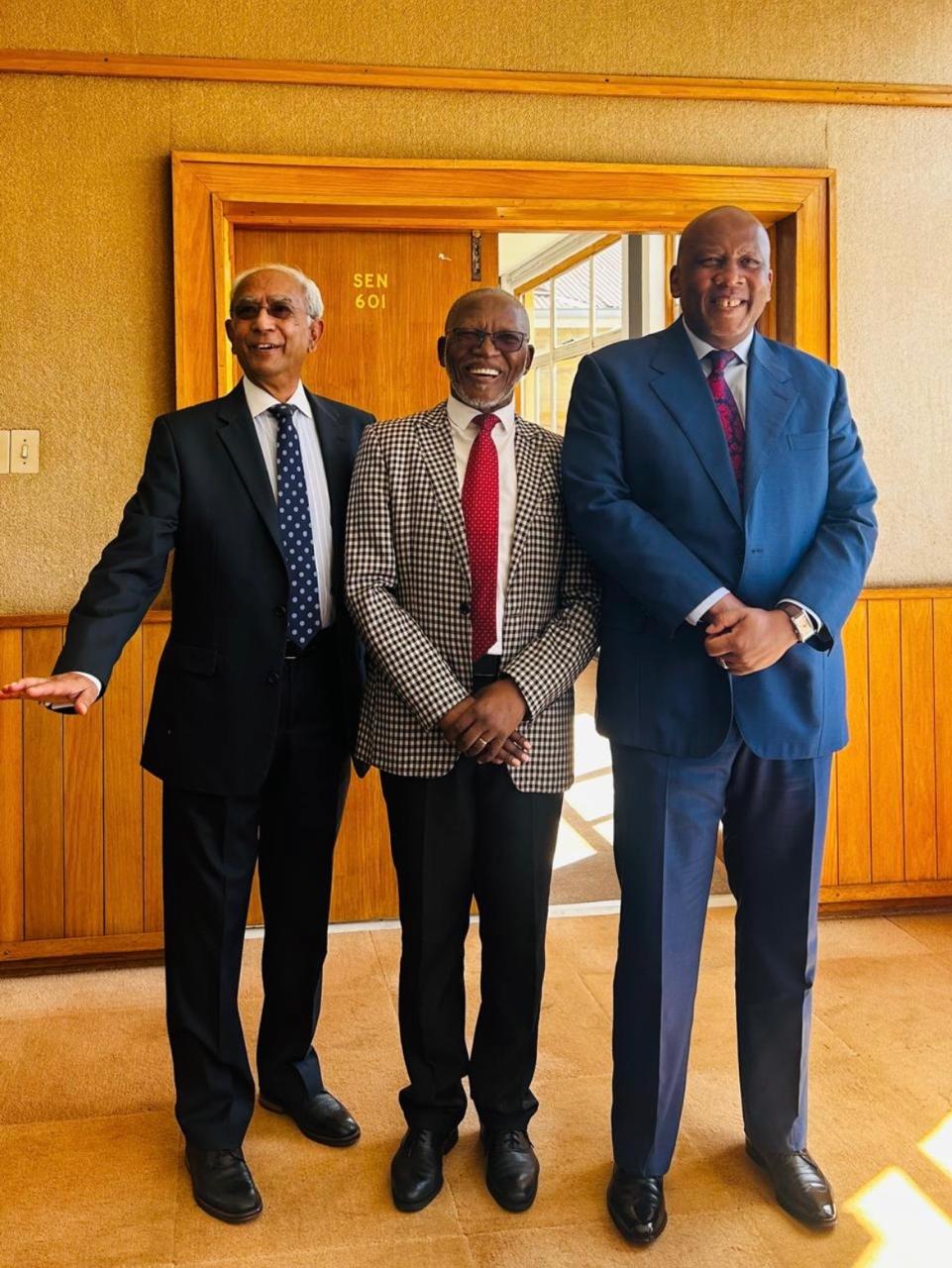
On 17 June 2026, I received a letter from the Royal Palace Secretariat in Maseru confirming that His Majesty King Letsie III had accepted my appointment to the 16th Council of the National University of Lesotho (NUL). The appointment runs for three years from 1 July 2026, and it follows my service on the 15th Council, which began in June 2023.
I do not take this lightly. Being asked to serve once is an honour. Being asked back tells me the work mattered.
How the Reappointment Came About
The appointment was made under Section 6(b)(vii) of the National University of Lesotho Act of 1992, following consultation with both the Council and Senate. The process is formal and deliberate: the Chancellor, who is the Head of State, exercises the power to appoint Council members from a range of backgrounds, including academia, public service, and business.
My first appointment, to the 15th Council, came through a letter dated 28 June 2023 from the then Senior Private Secretary, Nyolosi Mphale. This time, the letter was signed by Thabang Tlalajoe, the current Senior Private Secretary to His Majesty. The continuity of the institution is striking, even as individual officeholders change.
Why the National University of Lesotho Matters to Me
I was born in Lesotho. The National University of Lesotho, founded in 1945 at its Roma campus in that broad valley ringed by the Maluti mountains, is more than an academic institution to the Basotho nation. It is where the country’s intellectual identity was forged. Its alumni include former heads of state, cabinet ministers, and scholars whose work has shaped policy across Southern Africa. Tito Mboweni, the former Governor of the South African Reserve Bank, studied there. So did Phumzile Mlambo-Ngcuka, the former Deputy President of South Africa.
Serving on the Council of a university with that history carries weight. It connects my work in South Africa back to the country where I grew up.
What the NUL Council Does
The Council is the supreme governing body of the National University of Lesotho. His Majesty King Letsie III serves as Chancellor and President of the Council, with a Chairman elected from among the members. At the 16th Council’s inaugural sitting on 1 July 2026, Dr Khabele Matlosa was elected Chairman for a second consecutive term.
The Council’s mandate covers academic policy, institutional accountability, financial oversight, and the strategic direction of the University. It includes ex-officio members such as the Vice-Chancellor, the Pro-Vice-Chancellor, and representatives from the Pius XII College House, alongside appointed external members drawn from different sectors.
His Majesty’s charge to the new Council was direct: exercise our duties with integrity and discipline, ensure the University’s policies support excellence in teaching and research, and act as one body in the service of the institution and the nation. He cautioned that diversity of opinion is valuable, but must never compromise institutional stability.
What I Bring to the Table
My academic life has been spent at the University of South Africa (UNISA), where I hold the title of Distinguished Professor and Professor Extraordinaire in the College of Education. I am the holder of the UNESCO Chair on Open Distance Learning at UNISA, Editor-in-Chief of Africa Education Review, and a C2 NRF-rated researcher. In 2022, I received UNISA’s Chancellor’s Award for Excellence in Research, the institution’s highest research honour.
My scholarly focus is the philosophy of education in Southern Africa, with particular attention to ubuntu and botho as ethical frameworks. I have also spent years working on the practical challenges of open and distance learning across the continent, through partnerships with UNESCO, the BRICS research consortium, and institutions from India to Brazil to Egypt.
This combination of governance experience, research standing, and regional networks is what I aim to bring to the 16th Council’s deliberations. NUL does not need more voices restating the obvious. It needs people who can connect Lesotho’s university to the wider world of higher education research and funding.
The Challenges Facing NUL
I will not pretend the road is smooth. Higher education across Africa faces real pressure. Public funding is constrained. The competition for academic talent is fierce, and the best graduates increasingly look beyond the continent for postgraduate opportunities. Digital infrastructure varies wildly. And universities are being asked to do more with less, at a time when the demands placed on them by governments and communities are only growing.
NUL has additional context: the 16th Council’s inauguration followed a period of litigation involving the Student Representative Council, which challenged aspects of the governance process in the High Court. The matter was resolved, but it is a reminder that university governance operates in a contested space where legitimacy must be earned and maintained, not assumed.
For my part, I am particularly focused on strengthening NUL’s research culture, extending its international partnerships, and supporting the integration of open and distance learning strategies that could widen access without diluting quality.
A Personal Reflection
There is something that sits with me about this reappointment. I left Lesotho to build my career in South Africa, and over the decades the distance grew. Serving on the NUL Council over the past three years has brought me back into regular contact with the institution that educated the generation before mine. Being asked to stay is more than a professional appointment. It is a recognition that the connection between a Mosotho scholar abroad and the university at home still holds.
I am grateful to His Majesty King Letsie III for the continued trust, to the Council and Senate of NUL for their confidence, and to UNISA for supporting my governance work beyond South Africa’s borders.
The 16th Council has its mandate. The work starts now.
________________________________________________________________________________________
Professor Moeketsi Letseka is a Distinguished Professor and Professor Extraordinaire in the College of Education at the University of South Africa (UNISA). He holds the UNESCO Chair on Open Distance Learning at UNISA, is a former Editor-in-Chief of Africa Education Review, and is a C2 NRF-rated researcher. He serves on the editorial boards of the Interdisciplinary Journal of Lifelong Learning, the African Journal of Neurodiversity, the West African Journal of Open and Flexible Learning, and the African Journal of Teacher Education and Development. He won the 2022 UNISA Chancellor’s Award for Excellence in Research and serves on South Africa’s National Commission for UNESCO. He was born in Lesotho.